
A school opts in, and its teachers and community are brought into the model — the same community buy-in process that has worked for a decade in India.
A laptop, a speaker, an internet connection — that's the entire hardware footprint required to bring a global expert into the room.
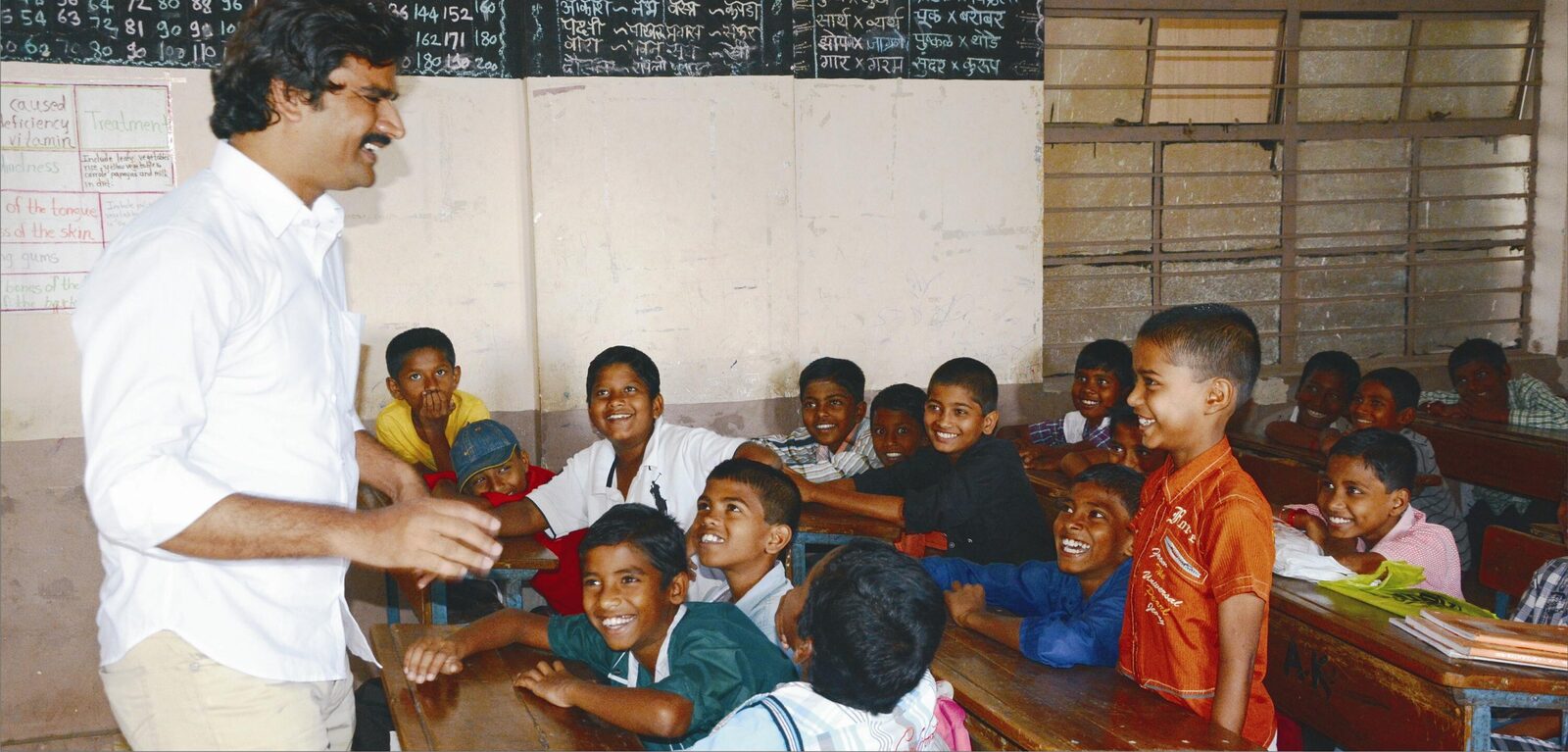
A volunteer scientist, engineer, entrepreneur, or educator joins the class live, on video, from wherever they are in the world.
Real questions, real answers — and a teacher equipped to keep that conversation going long after the session ends.
ICT literacy and confidence-building for teachers, so the technology in the room never becomes the barrier.
Communication skills, confidence, and leadership — built through the act of asking a stranger a real question.
Recruiting and coordinating volunteer professionals willing to give a classroom an hour of their time and expertise.
Working with parents, school leaders, and local partners so a Global Classroom becomes part of how a community sees itself.
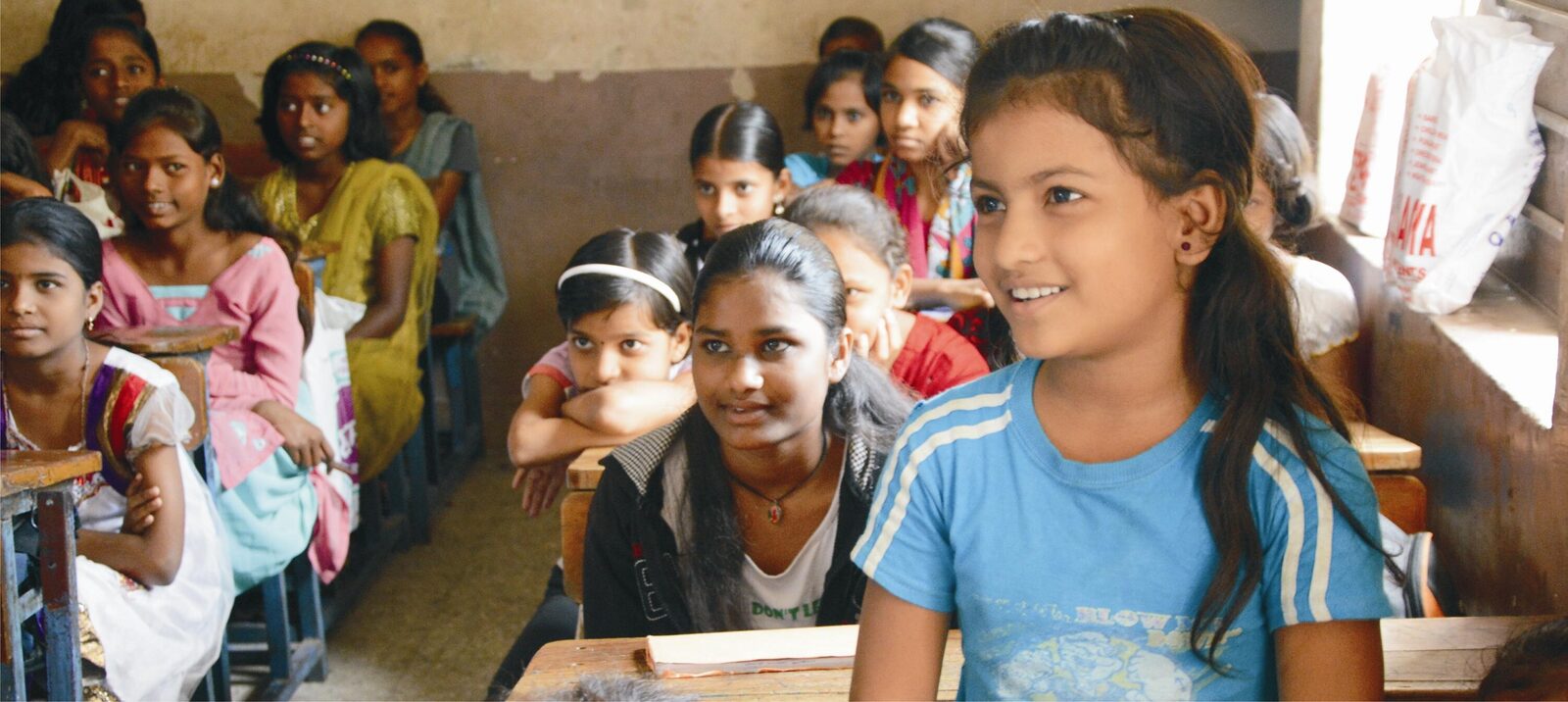
Not for gender, income, geography, or the size of their school. Under-resourced schools and communities — historically served last, if at all — are the core of this mission, not an afterthought.
Every Global Classroom session is designed around four goals of the UN 2030 Agenda — not as a slogan, but as the actual mechanics of how the model works.
Every session gives students in under-resourced schools access to expert-led learning they couldn't otherwise reach — the core of SDG 4's promise of inclusive, equitable, quality education for all.
Girls and young women take part on equal footing in every Global Classroom — asking questions of scientists and engineers, including women in STEM, that widen what they picture as possible for themselves.
A single laptop and an internet connection put a rural classroom on equal footing with a well-resourced city school for one hour — closing an access gap that geography and income would otherwise decide.
Every session depends on a partnership — a school, a volunteer expert, and a community, often spanning continents — built on the same spirit of global collaboration SDG 17 calls for.
No. Minimal connectivity and hardware are exactly what the model is built to work around — schools with little in place today are the core audience, not an edge case.
Global Classrooms Foundation does not charge participating schools. The Foundation is currently building its funding base to support hardware, connectivity, and coordination costs — see Support the Mission.
Volunteer scientists, engineers, entrepreneurs, educators, and other professionals who join a session live, drawn from the same international mentor network already supporting the founding program in India.
E-learning is one-way. A Global Classroom is a live, two-way conversation between a student and a real person — the human connection is the product; the screen is only how we deliver it.